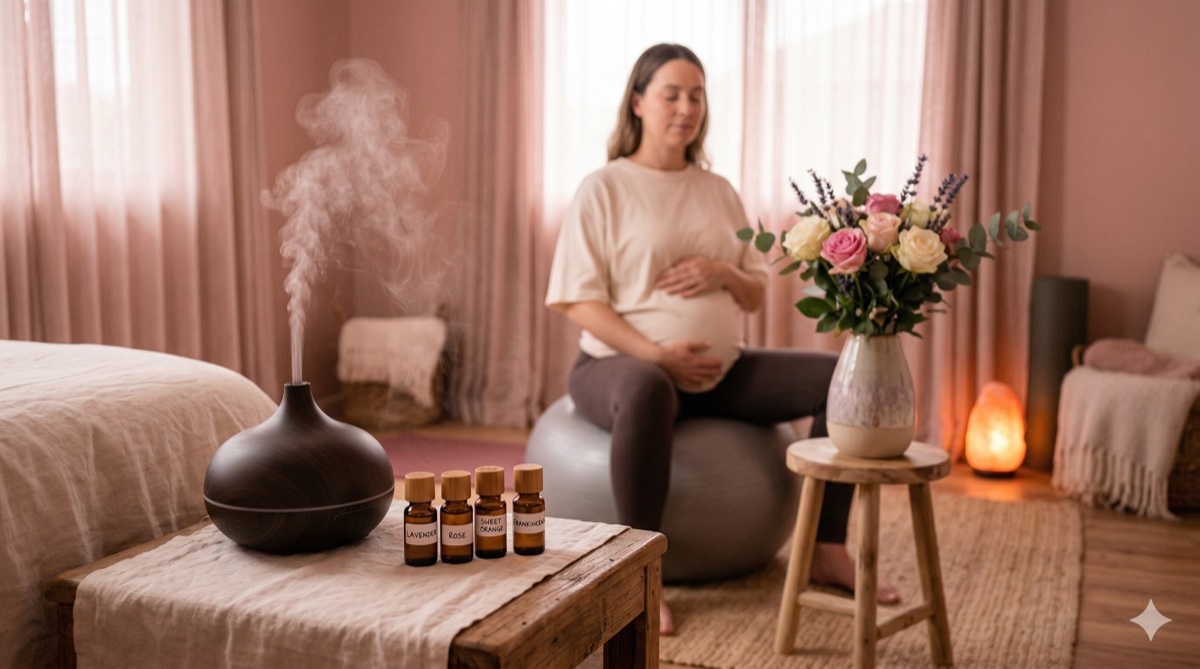
As your due date approaches, it is natural to feel a mixture of excitement and apprehension about the birthing process. Many women seek natural methods to manage labor discomfort and anxiety—and aromatherapy for labor offers a gentle, evidence-based approach that can transform your birth experience.[1]
What Is Aromatherapy for Labor?
Aromatherapy uses highly concentrated essential oils extracted from plants to support physical and emotional wellbeing. During labor, specific essential oils can help reduce anxiety, ease discomfort, and create a calming atmosphere that promotes the natural progression of childbirth.
The practice works through two primary pathways: inhalation, which stimulates the olfactory system and influences the limbic brain (your emotional center), and topical application, where oils absorbed through the skin enter the bloodstream. Both methods can complement your existing mindful breathing during pregnancy practice.
The Science Behind Aromatherapy in Childbirth
Research into aromatherapy for labor has grown significantly in recent years, with multiple studies suggesting potential benefits. A 2020 systematic review published in the Ethiopian Journal of Health Sciences (PMID: 32874088) analyzed numerous trials and found that most indicated a positive effect of aromatherapy in helping to reduce labor pain and anxiety, though the authors noted that evidence quality varied across studies.
A 2021 meta-analysis in the Journal of Obstetrics and Gynecology (PMID: 32666866) suggested that aromatherapy may help decrease both pain and anxiety during the first stage of labor in first-time mothers. Perhaps most reassuringly, a critical review published in Clinical Obstetrics and Gynecology (PMID: 33927109) concluded that aromatherapy can be administered safely throughout the perinatal period when proper guidelines are followed.
More recent research from 2024 in the journal Healthcare (PMID: 39685103) indicated that aromatherapy may provide benefits during childbirth and the postpartum period. A 2025 clinical trial published in Explore (PMID: 39577393) suggested sweet orange oil may help with both pain and anxiety during labor. However, it is important to note that while these findings are promising, individual responses to aromatherapy vary, and it should be viewed as a complementary approach rather than a replacement for medical pain management.
Safe Essential Oils for Labor
Not all essential oils are appropriate for use during pregnancy and childbirth. Here are the most researched and generally considered safe options for labor:
Lavender (Lavandula angustifolia)
Lavender essential oil is perhaps the most studied oil for labor support. Its calming properties may help reduce anxiety and promote relaxation without interfering with contractions. Research suggests that lavender aromatherapy may help lower cortisol levels and create a sense of peacefulness during intense moments. Many women find lavender particularly helpful during early labor when anxiety tends to be highest.
Clary Sage (Salvia sclarea)
Important: Clary sage should only be used during active labor—never during pregnancy. Some practitioners suggest this oil may help support contractions that have already begun, though it does not induce labor. Some midwives recommend clary sage for women experiencing slow or irregular contractions. Its earthy, herbal aroma also has mood-balancing properties that may help you feel more centered during transition.
Sweet Orange (Citrus sinensis)
The 2025 clinical trial mentioned earlier (PMID: 39577393) suggested sweet orange oil may be helpful for labor support. Its uplifting, citrusy aroma may help combat nausea (common during labor) while potentially reducing anxiety and perceived pain intensity. Sweet orange is generally considered gentle and is often well-tolerated even by those sensitive to stronger scents.
Damask Rose (Rosa damascena)
Research published in the Journal of Integrative Medicine (PMID: 29526235) suggested that damask rose essential oil may help reduce pain and anxiety during the first stage of labor. Its exquisite floral scent creates a luxurious, nurturing atmosphere. Rose oil is particularly valued for its emotional balancing properties, which may help women feel supported and cared for during the vulnerability of childbirth.
How to Use Aromatherapy During Labor
There are several effective methods for incorporating essential oils into your birth experience:
- Inhalation: The simplest method involves adding 2-3 drops of essential oil to a cotton ball, tissue, or diffuser. Keep it near your birthing space so you can breathe in the aroma as needed. This method is ideal for hospital births where diffusers may not be permitted.
- Massage: Dilute essential oils in a carrier oil (such as sweet almond or coconut oil) at a 1-2% concentration—approximately 2-4 drops per teaspoon of carrier oil. Your birth partner can massage your lower back, shoulders, or feet during contractions. Combining massage with breathing techniques for stress relief can amplify the calming effect.
- Compress: Add a few drops of essential oil to a bowl of warm or cool water, soak a flannel in the mixture, and apply it to your forehead, lower back, or abdomen. This can be particularly soothing during active labor.
- Bath: If you are planning a water birth or using a bath during early labor, add 4-6 drops of essential oil mixed with a tablespoon of carrier oil or full-fat milk (to help disperse the oil). Never add undiluted essential oils directly to bath water.
Creating Your Birth Plan with Aromatherapy
If aromatherapy appeals to you, discuss your preferences with your midwife or healthcare provider during pregnancy. Consider the following when planning:
- Choose 2-3 essential oils rather than many—this prevents sensory overload and helps you identify which works best for you.
- Test each oil during late pregnancy (after 37 weeks) to ensure you do not have any adverse reactions and find scents you genuinely enjoy.
- Pack your chosen oils in your hospital bag along with a small diffuser, cotton balls, and carrier oil for massage.
- Inform your birth partner about your preferences so they can help set up and adjust the aromatherapy as needed.
- Be flexible—you may find that your scent preferences change during labor, and that is completely normal.
Safety Considerations and Contraindications
While aromatherapy is generally safe during labor when used correctly, certain precautions are essential:
- Always consult your healthcare provider or a certified aromatherapist before using essential oils during pregnancy or labor.
- Use only therapeutic-grade essential oils from reputable suppliers.
- Never ingest essential oils during pregnancy or labor.
- Keep all essential oils away from newborns until you have consulted with a healthcare professional.
- Avoid clary sage, jasmine, and rose during pregnancy—reserve these for active labor only.
- If you have asthma, epilepsy, or other medical conditions, seek professional guidance before using essential oils.
- Perform a patch test before topical application to check for skin sensitivity.
Understanding how your body responds to stress can help you recognize when aromatherapy might be most beneficial during your labor journey.
Tips for Birth Partners
If you are supporting someone during labor, here is how you can help with aromatherapy:
- Familiarize yourself with the chosen essential oils before the birth.
- Prepare small containers with pre-diluted massage oil so you are ready when needed.
- Watch for cues—if the person in labor seems overwhelmed by scent, reduce or stop aromatherapy immediately.
- Offer choices: "Would you like lavender or orange?" rather than assuming preferences.
- Remember that less is often more—subtle scent is usually more effective than overwhelming fragrance.
Embracing Natural Support for Your Birth
Aromatherapy for labor offers a gentle, complementary approach that may enhance your birth experience naturally. Whether you choose calming lavender, uplifting sweet orange, or the emotionally supportive damask rose, these plant essences may help you feel more grounded, relaxed, and connected to your body during one of life's most profound moments.
Start exploring aromatherapy during late pregnancy by sampling different oils and noticing how they affect your mood and body. Remember that every birth is unique, and what works for one person may differ for another. Trust your instincts, stay flexible, and know that you have natural tools available to support you through this transformative experience.
Your body knows how to give birth. Aromatherapy simply helps create the calm, supportive environment that allows that wisdom to unfold.
- Tabatabaeichehr M, Mortazavi H. The Effectiveness of Aromatherapy in the Management of Labor Pain and Anxiety: A Systematic Review. Ethiop J Health Sci. 2020;30(3):449-458. PMID: 32874088
- Liao CC, et al. Aromatherapy intervention on anxiety and pain during first stage labour in nulliparous women: a systematic review and meta-analysis. J Obstet Gynaecol. 2021;41(1):21-31. PMID: 32666866
- Bertone AC, Dekker RL. Aromatherapy in Obstetrics: A Critical Review of the Literature. Clin Obstet Gynecol. 2021;64(3):572-588. PMID: 33927109
- Lima-De-La-Iglesia C, et al. Benefits of Complementary Therapies During Pregnancy, Childbirth and Postpartum Period: A Systematic Review. Healthcare. 2024;12(23):2481. PMID: 39685103
- Nascimento JC, et al. Effectiveness of aromatherapy with sweet orange oil (Citrus sinensis L.) in relieving pain and anxiety during labor. Explore (NY). 2025;21(1):103081. PMID: 39577393
- Hamdamian S, et al. Effects of aromatherapy with Rosa damascena on nulliparous women's pain and anxiety of labor during first stage of labor. J Integr Med. 2018;16(2):120-125. PMID: 29526235