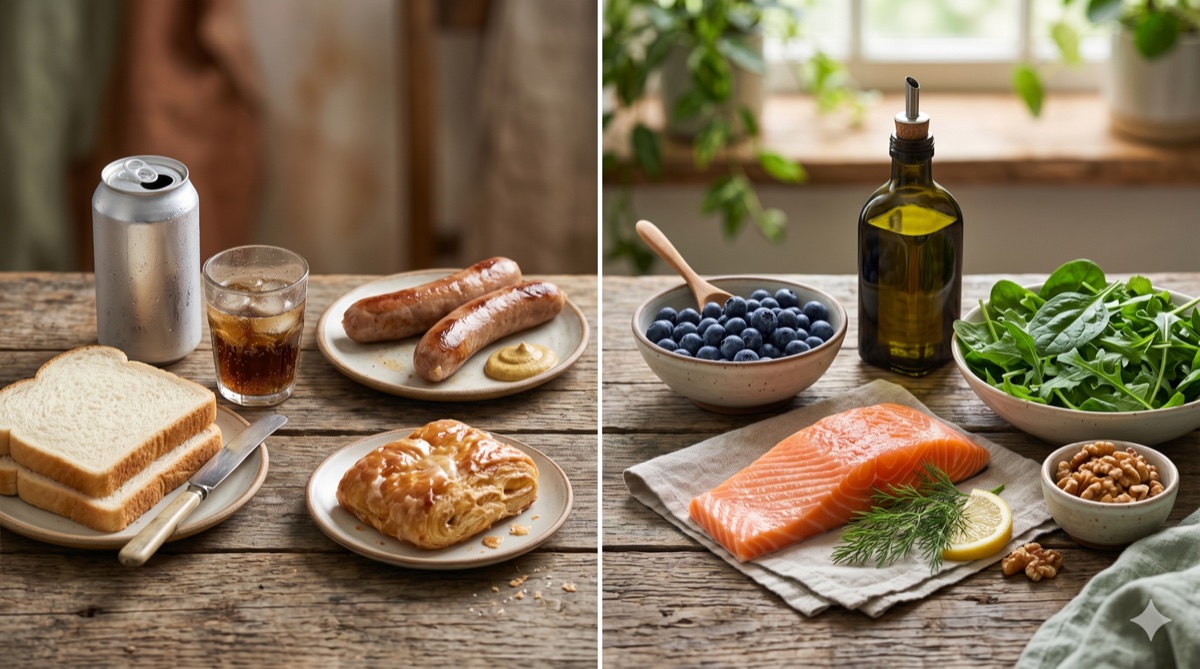
That afternoon slump, the stubborn joint stiffness, the brain fog that won't lift — what if many of these everyday discomforts trace back to what's on your plate? Chronic inflammation is increasingly recognized as a silent driver behind some of the most common health conditions, and the foods you eat play a central role in either fueling or fighting it.
What Is Inflammation, Really?
Inflammation is your body's natural defense mechanism. When you cut your finger or fight off a cold, your immune system launches an acute inflammatory response — heat, redness, swelling — to protect and heal. This type of short-term inflammation is essential for survival.
The problem arises when inflammation becomes chronic. Instead of switching off after the threat passes, low-grade inflammation persists for months or years, silently damaging healthy tissues. Scientists refer to this state as inflammageing — a chronic, low-level inflammatory condition that accelerates aging and disease[1].
Key biomarkers like C-reactive protein (CRP), interleukin-6 (IL-6), and tumor necrosis factor alpha (TNF-alpha) serve as measurable indicators of this internal fire. Research shows that dietary choices directly influence these markers[2].
Foods That Fuel Inflammation
Not all foods affect your body equally. Certain dietary patterns — particularly those high in ultra-processed ingredients — can keep your immune system in a constant state of alert.
Added Sugars and High-Fructose Corn Syrup
Soda, candy, baked goods, and many packaged snacks deliver large amounts of added sugars. A systematic review of controlled feeding trials found that high intakes of sugar-sweetened beverages were associated with elevated inflammatory biomarkers, including CRP[3]. When consumed in excess, fructose promotes the production of pro-inflammatory cytokines and contributes to metabolic stress in the liver.
Refined Carbohydrates
White bread, pastries, white rice, and most commercial baked goods are stripped of fiber and nutrients during processing. These refined carbs cause rapid blood sugar spikes, which trigger inflammatory responses. Research consistently links high refined carbohydrate intake to elevated inflammatory markers[4].
Processed and Red Meat
A 2025 meta-analysis of 22 randomized controlled trials found that greater total red meat intake led to significantly higher CRP levels. Crucially, processed red meat — such as sausages, hot dogs, and deli meats — showed the strongest inflammatory effect, while unprocessed red meat did not produce the same response[5]. Processing methods like smoking, curing, and adding preservatives appear to be key drivers.
Trans Fats and Excess Omega-6 Oils
Artificial trans fats, found in some margarines, shortenings, and fried foods, are among the most potent dietary promoters of inflammation. Although many countries have restricted trans fats, partially hydrogenated oils still appear in certain processed products. Additionally, an imbalance between omega-6 and omega-3 fatty acids — common in Western diets heavy on seed oils like soybean and corn oil — may promote inflammatory signaling[4].
Alcohol
While moderate alcohol consumption is sometimes debated, regular or heavy drinking clearly promotes inflammation. Alcohol disrupts gut barrier function, allowing bacterial toxins to enter the bloodstream and trigger immune responses. It also places metabolic stress on the liver, a key organ in managing systemic inflammation[1].
Ultra-Processed Foods
The category of ultra-processed foods — including chips, instant noodles, flavored snacks, and many frozen meals — combines multiple inflammatory triggers: added sugars, refined carbs, unhealthy fats, artificial additives, and excess sodium. These foods typically lack the fiber, antioxidants, and phytochemicals that help counterbalance inflammation[4].
The Health Consequences of Chronic Inflammation
Chronic low-grade inflammation is not a single disease — it is a risk factor woven through many of the most prevalent chronic conditions.
A comprehensive umbrella review analyzing data from over 4.3 million people found that pro-inflammatory diets were significantly associated with 71% of the 38 health outcomes studied. The evidence was classified as convincing for myocardial infarction and highly suggestive for all-cause mortality and overall cancer risk[2].
- Cardiovascular disease: Chronic inflammation damages blood vessel walls and promotes plaque buildup, increasing the risk of heart attack and stroke.
- Type 2 diabetes: Inflammatory cytokines interfere with insulin signaling, contributing to insulin resistance.
- Cancer: Persistent inflammation can damage DNA and create an environment that supports tumor growth, particularly in colorectal, pancreatic, and respiratory cancers.
- Depression and cognitive decline: Inflammatory markers are consistently elevated in people with depression. Chronic inflammation is also linked to a higher risk of Alzheimer's disease and dementia[1].
- Autoimmune conditions: Diseases like rheumatoid arthritis, inflammatory bowel disease, and lupus are directly driven by dysregulated immune and inflammatory responses.
- Accelerated aging: Inflammageing contributes to frailty, sarcopenia (muscle loss), and chronic kidney disease[1].
Anti-Inflammatory Foods That Help
The good news: just as some foods promote inflammation, others actively combat it. A large body of evidence points to specific foods and nutrients with demonstrable anti-inflammatory effects.
Fatty Fish
Salmon, mackerel, sardines, and anchovies are rich in omega-3 fatty acids — specifically EPA and DHA. These fatty acids are precursors to anti-inflammatory molecules called resolvins and protectins. Regular consumption of fatty fish is associated with lower levels of CRP and other inflammatory markers[6].
Berries
Blueberries, strawberries, cherries, and raspberries are packed with anthocyanins and other polyphenols — compounds that have been shown to reduce oxidative stress and modulate inflammatory pathways[4].
Leafy Green Vegetables
Spinach, kale, arugula, and Swiss chard provide fiber, folate, and a wide range of phytochemicals that support the immune system and help regulate inflammatory responses. Adequate intake of vegetables and fruit is consistently associated with decreased pro-inflammatory biomarkers[4].
Extra Virgin Olive Oil
A cornerstone of the Mediterranean diet, extra virgin olive oil (EVOO) contains oleocanthal — a compound that has been shown to inhibit the same inflammatory enzymes targeted by ibuprofen. A 2026 meta-analysis confirmed that EVOO consumption is associated with reductions in TNF-alpha, CRP, and IL-6[7].
Nuts and Seeds
Almonds, walnuts, flaxseeds, and chia seeds provide healthy fats, fiber, and antioxidants. Regular nut consumption is associated with lower inflammatory markers and reduced cardiovascular risk.
Whole Grains
Oats, brown rice, quinoa, and whole wheat retain their fiber and nutrient content. Dietary fiber feeds beneficial gut bacteria, which produce short-chain fatty acids that help regulate immune function and reduce systemic inflammation[8].
Turmeric and Other Spices
Curcumin, the active compound in turmeric, is one of the most extensively studied anti-inflammatory agents. It modulates the NF-kB pathway — often called the master switch of inflammation. Ginger, cinnamon, and rosemary also possess notable anti-inflammatory properties.
The Mediterranean Diet: A Proven Anti-Inflammatory Pattern
Rather than focusing on individual nutrients, research increasingly supports whole dietary patterns. The Mediterranean diet stands out as the most evidence-backed anti-inflammatory eating approach.
A 2025 systematic review and meta-analysis of 33 randomized controlled trials found that the Mediterranean diet significantly reduced hs-CRP, IL-6, and IL-17 compared to control diets[9]. Another 2025 review analyzing 65 studies confirmed that Mediterranean, vegetarian, and vegan diets all demonstrated potential in reducing inflammation, with the Mediterranean diet showing the broadest range of benefits[10].
The Mediterranean diet emphasizes olive oil, vegetables, fruits, legumes, whole grains, and moderate fish consumption — while limiting red meat, processed foods, and added sugars. It naturally incorporates nearly every anti-inflammatory food category listed above.
If you want to explore how other daily habits influence your body's stress response, read our guide on how your body responds to chronic stress.
Beyond Diet: Lifestyle Strategies to Reduce Inflammation
Food is powerful, but it is not the only lever. Several lifestyle factors independently influence inflammation levels.
Physical Activity
Regular moderate exercise — such as brisk walking, swimming, or cycling — reduces inflammatory markers even without weight loss. A landmark review documented evidence for prescribing exercise across 26 chronic diseases, many of which are inflammation-related[11]. Even 20–30 minutes of walking per day can make a measurable difference.
Sleep Quality
Poor sleep elevates CRP and IL-6 levels. Prioritizing 7–9 hours of quality sleep each night is one of the most impactful anti-inflammatory choices you can make. Our complete sleep hygiene guide offers practical steps to improve your rest.
Stress Management
Chronic psychological stress activates the same inflammatory pathways as physical injury. Techniques like conscious breathing, meditation, and journaling can help regulate cortisol and calm the immune system. Research on vagus nerve regulation shows how activating the parasympathetic nervous system directly reduces inflammation.
Gut Health
Your gut microbiome plays a central role in regulating inflammation. A diverse, fiber-rich diet supports beneficial bacteria that produce anti-inflammatory compounds. In contrast, a diet high in processed foods and low in fiber can compromise gut barrier function, allowing inflammatory toxins to enter the bloodstream[8]. Learn more about this connection in our article on the gut health and mood connection.
Practical Tips to Start Reducing Inflammation
You don't need to overhaul your entire diet overnight. Small, consistent changes compound over time.
- Swap refined grains for whole grains: Choose brown rice, oats, or quinoa instead of white rice and white bread.
- Add one serving of fatty fish per week: Salmon, mackerel, or sardines are excellent choices.
- Use extra virgin olive oil as your primary cooking fat: Replace seed oils and margarine where possible.
- Eat a handful of berries or nuts daily: An easy snack that delivers antioxidants and healthy fats.
- Limit sugary drinks: Replace soda and sweetened beverages with water, herbal tea, or sparkling water with lemon.
- Cook more meals at home: Home cooking naturally reduces exposure to ultra-processed ingredients.
- Spice it up: Add turmeric, ginger, or cinnamon to meals for an anti-inflammatory boost.
- Move daily: Even a 20-minute walk can help lower inflammatory markers.
- Prioritize sleep: Aim for 7–9 hours of restorative sleep each night.
Reducing inflammation is not about perfection or elimination — it's about shifting the balance. Every meal is an opportunity to choose foods that support your body rather than stress it. Start with one swap today, and let the small changes build toward a healthier, more energized you.
References
- Ferrucci L, Fabbri E. "Inflammageing: chronic inflammation in ageing, cardiovascular disease, and frailty." Nature Reviews Cardiology, 2018;15(9):505-522. https://doi.org/10.1038/s41569-018-0064-2.
- Marx W, Veronese N, Kelly JT, et al. "The Dietary Inflammatory Index and Human Health: An Umbrella Review of Meta-Analyses of Observational Studies." Advances in Nutrition, 2021;12(5):1681-1690. https://doi.org/10.1093/advances/nmab037.
- Qi X, Chiavaroli L, Lee D, et al. "Effect of Important Food Sources of Fructose-Containing Sugars on Inflammatory Biomarkers: A Systematic Review and Meta-Analysis of Controlled Feeding Trials." Nutrients, 2022;14(19):3986. https://doi.org/10.3390/nu14193986.
- Bujtor M, Turner AI, Torres SJ, Esteban-Gonzalo L, Pariante CM, Borsini A. "Associations of Dietary Intake on Biological Markers of Inflammation in Children and Adolescents: A Systematic Review." Nutrients, 2021;13(2):356. https://doi.org/10.3390/nu13020356.
- Wang Y, Uffelman CN, Hill ER, et al. "Red meat intake and its influences on inflammation and immune function biomarkers in human adults: a systematic review and meta-analysis." Critical Reviews in Food Science and Nutrition, 2025. https://doi.org/10.1080/10408398.2025.2584482.
- Harvard Health Publishing. "Foods that fight inflammation." Harvard Health Blog, 2026. https://www.health.harvard.edu/staying-healthy/foods-that-fight-inflammation.
- Vidal Damasceno J, Garcez A, Anelo Alves A, et al. "Effects of daily extra virgin olive oil consumption on biomarkers of inflammation and oxidative stress: a systematic review and meta-analysis." Critical Reviews in Food Science and Nutrition, 2026;66(2):392-408. https://doi.org/10.1080/10408398.2025.2525446.
- Hills RD Jr, Pontefract BA, Mishcon HR, et al. "Gut Microbiome: Profound Implications for Diet and Disease." Nutrients, 2019;11(7):1613. https://doi.org/10.3390/nu11071613.
- Keshani M, Rafiee S, Heidari H, et al. "Mediterranean Diet Reduces Inflammation in Adults: A Systematic Review and Meta-analysis of Randomized Controlled Trials." Nutrition Reviews, 2025. https://doi.org/10.1093/nutrit/nuaf213.
- Ilari S, Proietti S, Milani F, et al. "Dietary Patterns, Oxidative Stress, and Early Inflammation: A Systematic Review and Meta-Analysis Comparing Mediterranean, Vegan, and Vegetarian Diets." Nutrients, 2025;17(3):548. https://doi.org/10.3390/nu17030548.
- Pedersen BK, Saltin B. "Exercise as medicine — evidence for prescribing exercise as therapy in 26 different chronic diseases." Scandinavian Journal of Medicine & Science in Sports, 2015;25(Suppl 3):1-72. https://doi.org/10.1111/sms.12581.