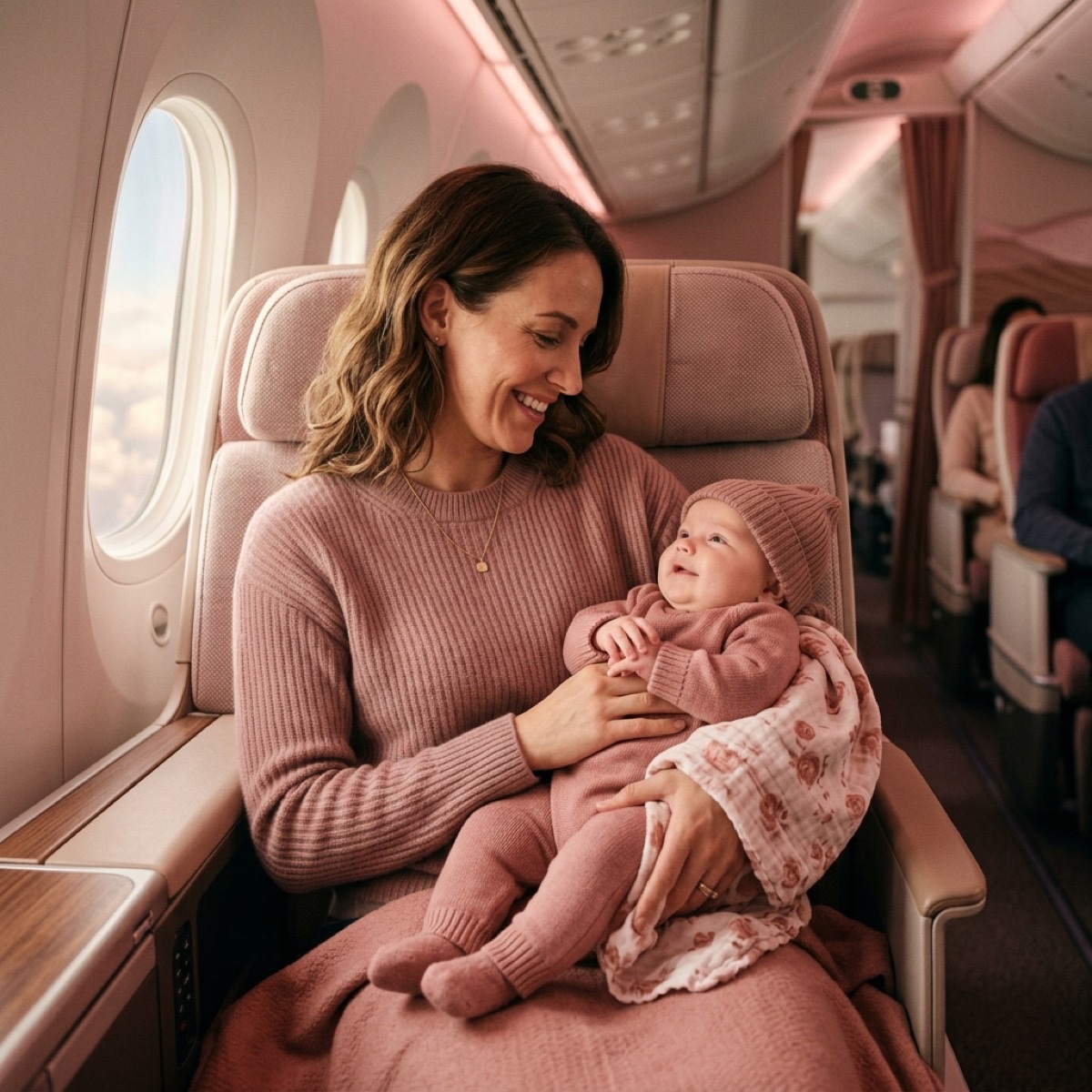
Flying with a baby for the first time can feel overwhelming. The logistics of gear, the unpredictability of routines, and the fear of a midair meltdown are enough to make any parent hesitate. However, with the right preparation and a bit of scientific insight, traveling with an infant can be a smooth and even enjoyable experience[1].
Choosing the Right Flight
Preparation begins long before you reach the airport. For your first journey, aim for destinations within a 2-to-3-hour radius. This duration is long enough to get settled but short enough to manage even if your little one isn't a fan of the new environment.
Timing is also critical. While night flights might seem like a good way to ensure sleep, they often disrupt a baby's delicate nocturnal routine. Being woken up during deep sleep for security checks or landing can lead to an overtired, fussy infant. Whenever possible, choose daytime flights that align with nap schedules rather than nighttime ones[2].
Managing Stimuli and Comfort
Airplanes are sensory minefields—loud engines, bright lights, and sudden pressure changes. Noise-canceling headphones are a game-changer for protecting your baby's sensitive hearing and reducing overstimulation. Some parents find that headphones specifically designed for infants, like the Alpine Muffy Baby, make a real difference.
For moving through the airport and during the flight, an ergonomic carrier like the Ergobaby Omni 360 is indispensable. It keeps your baby close—promoting a sense of safety—while leaving your hands free for luggage and documents. Research shows that close physical contact helps regulate an infant's heart rate and reduces stress during travel[3].
The Science of Ear Pain
The most common concern for flying parents is ear pain during takeoff and landing. This happens because an infant's Eustachian tubes are smaller and horizontal, making it harder for them to equalize pressure[4]. To help your baby, encourage swallowing during altitude changes:
- Breastfeed or bottle-feed: The sucking motion helps open the tubes.
- Use a pacifier: If they aren't hungry, the sucking reflex still provides relief.
- Stay awake: Swallowing frequency decreases during sleep, so try to keep them awake during descent.
Airport Logistics
Remember that traveling with an infant often grants you "Fast Track" status at security and boarding. Don't hesitate to use separate queues designed for families—it significantly reduces wait times and stress.
When it comes to gear like strollers and car seats, checking them in is usually required. However, the American Academy of Pediatrics (AAP) strongly recommends using an FAA-approved car seat on board for maximum safety during turbulence[5]. If you do check them in, use protective bags to prevent invisible structural damage that could compromise the seat's safety later.
Final Tips for a Smooth Journey
- Board Last: Minimize the time spent in the cramped cabin by boarding as late as possible.
- Choose Back Seats: These are often closer to the changing tables and the galley, where you can easily request water.
- Pack "New" Toys: A few favorite or brand-new toys can provide much-needed distraction when sleep isn't happening.
By staying calm and prepared, you're not just making the flight easier for yourself—you're signaling safety to your baby, helping them associate travel with positive experiences.
Products You Might Find Helpful
While not essential, some parents find these tools useful for traveling with a baby:
- Alpine Muffy Baby — Ear protection designed specifically for infants, reducing cabin noise and overstimulation. View on Amazon
- Ergobaby Carrier — An ergonomic carrier that keeps your baby close and leaves your hands free at the airport and onboard. View on Amazon
This article contains affiliate links. If you purchase through these links, we may earn a small commission at no extra cost to you. As an Amazon Associate, we earn from qualifying purchases.
References
- Mayo Clinic. "Air travel with an infant: What you need to know." MayoClinic.org, 2024. https://www.mayoclinic.org/healthy-lifestyle/infant-and-toddler-health/expert-answers/air-travel-with-an-infant/faq-20058539.
- Cleveland Clinic. "Flying with a Baby: Tips for a Smooth Trip." Health Essentials, 2023. https://health.clevelandclinic.org/flying-with-a-baby/.
- Feldman, R. "The Neurobiology of Human Attachments." Nature Reviews Neuroscience, 2017. https://doi.org/10.1038/nrn.2017.24.
- Medical News Today. "How to help a baby with ear pain on a plane." MedicalNewsToday.com, 2022. https://www.medicalnewstoday.com/articles/baby-ear-pain-on-plane.
- American Academy of Pediatrics. "Flying with a Baby." HealthyChildren.org, 2024. https://www.healthychildren.org/English/safety-prevention/on-the-go/Pages/Flying-with-Baby.aspx.