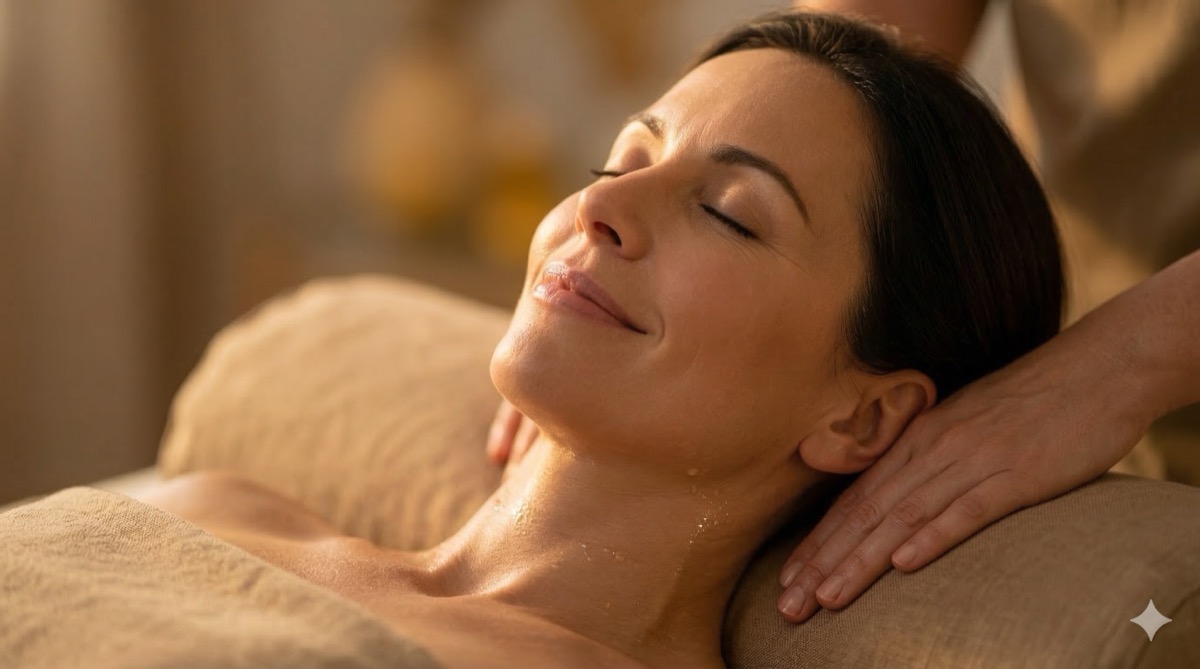
Massage is far more than a moment of relaxation — for many people it is meaningful support for how they feel. It is often described as acting directly on the biochemistry of the brain, but the evidence is more modest than the popular version suggests. The most consistent effects are on perceived tension and mood, rather than on any single hormone.[1]
How Massage Reaches the Mind
- Cortisol — a smaller effect than commonly claimed: you will often read that massage lowers this stress hormone by around 30%. A comprehensive review of the research found the effect is generally very small and, in most cases, not statistically distinguishable from zero[2]. Whatever massage does for stress, cortisol does not appear to be the main explanation.
- Perceived tension and mood: people frequently report feeling calmer and less tense after a session, and studies have observed changes in heart rate and brain activity during moderate-pressure massage[3].
- Nervous system regulation: massage can help shift the body toward its recovery mode ("rest and digest"), though how much and for how long varies between people.
What Massage Can Help With
A meta-analysis of trials in people experiencing depression found consistent positive effects of massage therapy[4], and many people report less anxiety and easier sleep. These are averages across studies rather than a promise for any one person, and the trials vary in quality and in what they compare massage against. Massage may also improve awareness of your own body, which matters in the process of working through trauma.
What the Research Says — and What Massage Does Not Replace
Massage can reduce perceived tension and briefly ease symptoms of stress or anxiety, but the response is individual. The kind of touch, the sense of safety, how often you go and your general health all make a difference. It is most sensible to treat manual therapy as one element of looking after yourself, alongside sleep, movement, relationships and professional help when that is needed.
Massage does not replace psychotherapy, medical consultation or medication prescribed by a specialist. If low mood, anxiety, insomnia or post-traumatic symptoms are making daily life difficult, it is worth discussing them with a doctor or psychologist. You should also tell your massage therapist about injuries, skin conditions, circulatory problems, pregnancy and anything else that affects whether a treatment is safe for you.
Choosing a Massage That Supports Stress Relief
To begin with, a gentle relaxation or Swedish massage usually works best. Firmer pressure does not automatically mean a better effect on the nervous system — pain can actually increase vigilance and tension. Before a session, ask about the practitioner's qualifications, how the appointment will run, and whether you can change position, pressure and the areas being touched.
- Name your goal: say whether you mainly want to unwind, sleep more calmly, or reduce tension in a particular area.
- Set your boundaries: you can point out areas you would rather not have massaged, ask for lighter pressure, or end the session at any moment.
- Watch the effect: pay attention to how you feel, how you sleep and how tense your muscles are over the next day or two, rather than judging the treatment only as you walk out.
Safe Touch, Consent and Experiences After Trauma
For some people, calm and predictable touch brings a sense of being cared for and helps bring attention back into the body. For others — particularly after difficult experiences — it can prompt discomfort. A good practitioner explains what they are going to do, asks for consent and responds to your signals. You stay clothed or covered as agreed, and you have the right to say "stop" at any point.
If touch triggers strong anxiety, numbness or recurring memories, look for someone who works in a trauma-informed way and consult a mental health professional. The aim is not to "push through" your body's reaction, but to build safety and choice gradually.
A Short Self-Massage for Tension During the Day
When a professional session is not available, you can combine gentle self-massage with slow breathing. Sit comfortably, release your jaw and spend a minute rubbing your hands, thumbs and forearms. Then make small circles at your temples or scalp, without causing pain. Breathe calmly, letting the exhale lengthen. A break like this does not treat mental health conditions, but it can help you notice tension and interrupt automatic clenching. You can read more about the physiology of settling in the guide to vagus nerve regulation.
Massage as Part of Looking After Yourself
Treating massage as prevention rather than only as a reward makes it easier to plan rest deliberately. There is no single correct frequency: an occasional session suits one person, while another prefers a regular appointment every few weeks. What counts is a real improvement in how you feel, your safety, the budget available, and no pressure to continue treatments that are not helping.
References
- Moyer CA, Rounds J, Hannum JW. "A meta-analysis of massage therapy research." Psychological Bulletin, 2004. https://doi.org/10.1037/0033-2909.130.1.3.
- Moyer CA, Seefeldt L, Mann ES, Jackley LM. "Does massage therapy reduce cortisol? A comprehensive quantitative review." Journal of Bodywork and Movement Therapies, 2011. https://doi.org/10.1016/j.jbmt.2010.06.001.
- Diego MA, Field T, Sanders C, Hernandez-Reif M. "Massage therapy of moderate and light pressure and vibrator effects on EEG and heart rate." International Journal of Neuroscience, 2004. https://doi.org/10.1080/00207450490249446.
- Hou WH, Chiang PT, Hsu TY, Chiu SY, Yen YC. "Treatment effects of massage therapy in depressed people: a meta-analysis." Journal of Clinical Psychiatry, 2010. https://doi.org/10.4088/JCP.09r05009blu.
- Rapaport MH, Schettler P, Bresee C. "A preliminary study of the effects of a single session of Swedish massage on hypothalamic-pituitary-adrenal and immune function in normal individuals." Journal of Alternative and Complementary Medicine, 2010. https://doi.org/10.1089/acm.2009.0634.
Frequently Asked Questions
How does massage help mental health?
Massage may briefly reduce perceived tension and support the body's shift into a state of rest. The effect is individual, and massage does not replace psychotherapy or medical treatment.
How often should I get a massage for stress relief?
There is no single correct frequency. Notice how you feel after a session and take your health, preferences and budget into account; an occasional massage can also be a worthwhile form of rest.
What type of massage is best for anxiety?
Many people choose a gentle relaxation or Swedish massage. What matters most is a sense of safety, being able to adjust the pressure, and consenting to every kind of touch.