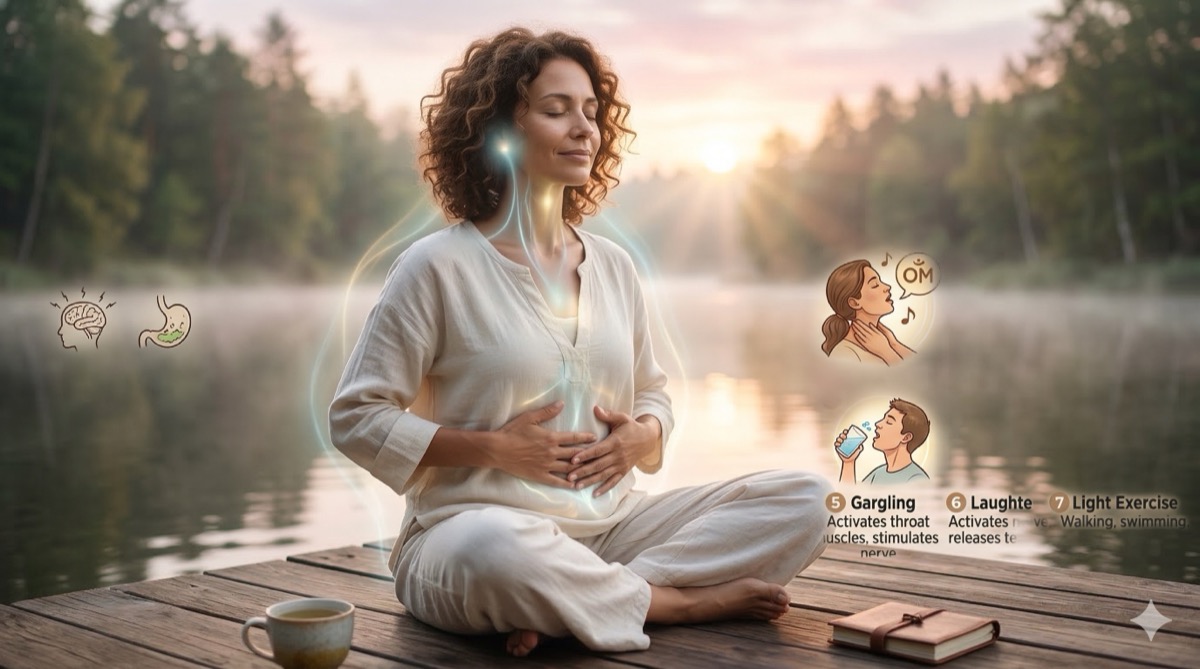
The vagus nerve is your body's superhighway between brain and body, connecting your brain to nearly every major organ. Understanding and regulating this remarkable nerve can transform how you experience stress, emotion, and overall health.[1]
What Is the Vagus Nerve?
The vagus nerve is the longest cranial nerve in your body, running from your brain stem through your neck and into your chest and abdomen. It's the main component of your parasympathetic nervous system—the "rest and digest" system that counters your stress response.
Signs of Low Vagal Tone
Vagal tone refers to how well your vagus nerve functions. Low vagal tone is associated with:
- Chronic stress and anxiety.
- Digestive problems.
- Inflammation.
- Heart rate variability issues.
- Difficulty relaxing.
- Mood instability.
The Benefits of Healthy Vagal Tone
When your vagus nerve functions optimally, you experience:
- Emotional regulation: Easier recovery from stress and upset.
- Better digestion: Improved gut function and nutrient absorption.
- Reduced inflammation: Lower systemic inflammation throughout the body.
- Heart health: Better heart rate variability and cardiovascular function.
- Improved sleep: Easier transition into restful states.
- Enhanced immunity: More robust immune response.
Effective Vagus Nerve Stimulation Techniques
1. Slow, Deep Breathing
Breathing is the most accessible way to activate your vagus nerve. The key is extending your exhale:
- Inhale for 4 seconds.
- Exhale for 6–8 seconds.
- Practice for 5–10 minutes daily.
The extended exhale signals safety to your nervous system, activating the parasympathetic response.
2. Cold Water Exposure
Splashing cold water on your face or ending your shower with cold water stimulates the vagus nerve. The shock activates the diving reflex, slowing your heart rate and promoting calm.
3. Humming, Chanting, or Singing
The vagus nerve passes through your vocal cords. Vibrations from vocalizing stimulate it directly. Try humming your favorite tune, chanting "Om," or singing in the shower.
4. Gentle Neck Massage
The vagus nerve runs along the sides of your neck. Gentle massage in this area can stimulate the nerve and promote relaxation. Use circular motions behind your earlobes and down the sides of your neck.
5. Gargling
Vigorous gargling with water activates the muscles at the back of your throat, stimulating the vagus nerve. Gargle for 30 seconds to 1 minute daily.
6. Laughter
Genuine laughter activates the vagus nerve and releases tension. Watch something funny, spend time with people who make you laugh, or try laughter yoga.
7. Light Exercise
Moderate exercise like walking, swimming, or gentle yoga improves vagal tone over time. The key is consistency rather than intensity.
Building Your Vagal Tone Practice
Like any muscle, your vagus nerve responds to regular exercise. Create a daily routine that includes:
- Morning: 5 minutes of extended exhale breathing.
- Midday: Brief walk or neck massage during stress.
- Evening: Cold water splash and humming before bed.
Lifestyle Factors That Support Vagal Health
- Sleep: Prioritize 7–9 hours of quality sleep.
- Nutrition: Omega-3 fatty acids support nerve function.
- Social connection: Positive relationships boost vagal tone.
- Mindfulness: Meditation and yoga enhance vagal function.
- Reduced screen time: Constant stimulation keeps you in sympathetic mode.
Patience and Consistency
Improving vagal tone takes time. You may notice immediate calming effects from breathing exercises, but lasting changes in your baseline nervous system function develop over weeks and months of consistent practice. Be patient with yourself and celebrate small improvements.
Listen to Your Body
As you explore vagus nerve regulation, notice what works best for you. Your body will guide you toward the practices it needs most. The goal isn't perfection but rather building a toolkit of techniques you can draw upon whenever you need to restore calm and balance.
References
- Breit S, Kupferberg A, Rogler G, Hasler G. "Vagus nerve as modulator of the brain-gut axis in psychiatric and inflammatory disorders." Frontiers in Psychiatry, 2018. https://doi.org/10.3389/fpsyt.2018.00044.
- Porges SW. "The Polyvagal Theory: Neurophysiological Foundations of Emotions, Attachment, Communication, and Self-regulation." W. W. Norton, 2011.
- Russo MA, Santarelli DM, O'Rourke D. "The physiological effects of slow breathing in the healthy human." Breathe, 2017. https://doi.org/10.1183/20734735.011717.
- Šrámek P, Simečková M, Janský L, et al. "Human physiological responses to immersion into water of different temperatures." European Journal of Applied Physiology, 2000. https://doi.org/10.1007/s004210050009.
- Gerritsen R, Band G. "Breathing as a tool for vagal tone enhancement." Frontiers in Psychology, 2018. https://doi.org/10.3389/fpsyg.2018.01861.
- Bennett MP, Zeller JM, Rosenberg L, McCann J. "The effect of mirthful laughter on the immune system." Medical Hypotheses, 2003. https://doi.org/10.1016/S0306-9877(03)00156-3.