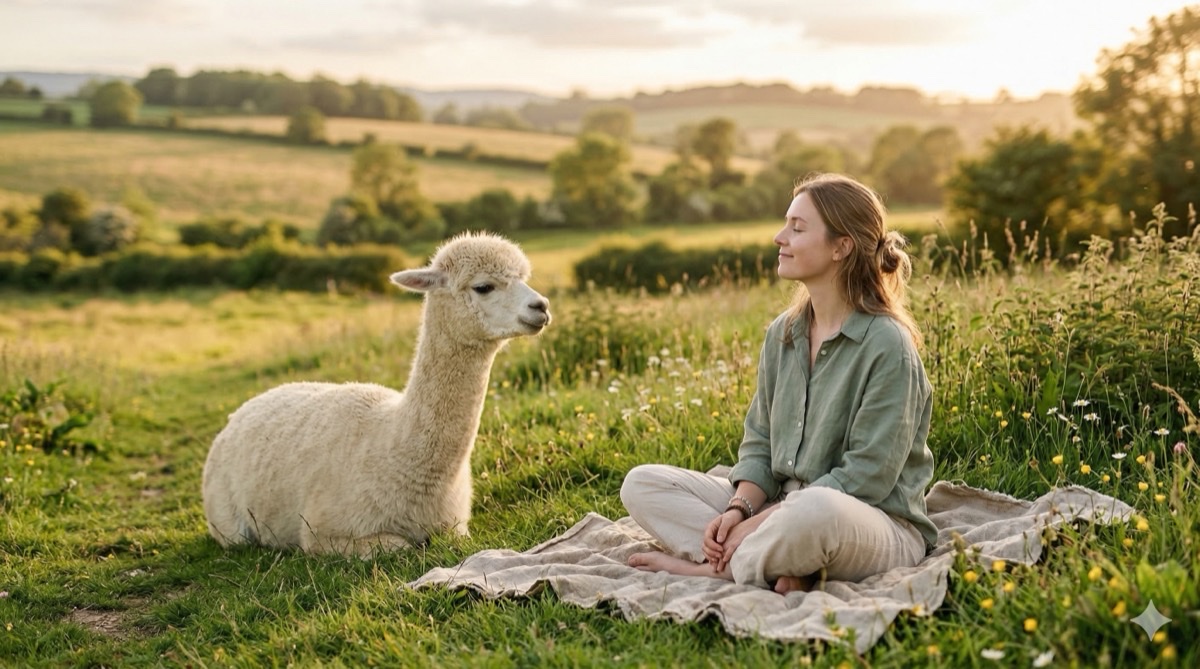
In a world filled with constant demands and digital overwhelm, an unexpected therapeutic approach is capturing hearts across the wellness community. Alpaca therapy—spending time with these gentle, curious creatures—offers a unique pathway to stress relief that combines the benefits of nature connection with the comfort of animal companionship[1].
What Is Alpaca Therapy?
Alpaca therapy falls under the umbrella of animal-assisted therapy (AAT), an area where research suggests interaction with animals may ease stress, though studies are typically small and short. Unlike traditional therapy settings, alpaca sessions typically take place outdoors, surrounded by nature—a combination that amplifies the calming effects.
These South American camelids, known for their soft fleece and gentle demeanor, create an environment of acceptance and peace. Their calm presence and curious nature make them ideal therapeutic companions for people seeking relief from chronic stress.
The Science Behind Animal-Assisted Therapy
Research demonstrates that interacting with therapy animals triggers several physiological changes:
- Reduced cortisol levels: Some studies have measured lower cortisol after short periods with animals, though results vary between studies and settings.
- Increased oxytocin: Often called the "bonding hormone", oxytocin promotes feelings of trust and relaxation.
- Lower blood pressure: Physical contact with animals has been linked to reduced blood pressure and heart rate.
- Enhanced mindfulness: Animals live entirely in the present moment, naturally encouraging you to do the same.
Why Alpacas Make Exceptional Therapy Animals
Alpacas possess several qualities that make them particularly effective for therapeutic work:
Gentle Temperament
Unlike some therapy animals, alpacas are naturally calm and non-aggressive. Their peaceful energy creates a safe space for emotional processing without fear or anxiety.
Sensory Comfort
Their incredibly soft fleece provides tactile stimulation that can be grounding for people experiencing anxiety or nervous system dysregulation. Touching their fiber engages your senses and brings you into the present moment.
Non-Judgmental Presence
Alpacas don't analyze, critique, or expect anything from you. This acceptance allows you to simply be, without the pressure of performance or conversation.
Connection to Nature
Spending time with alpacas typically occurs in outdoor settings—meadows, farms, or sanctuaries. This connection to natural environments provides additional stress-relieving benefits.
What to Expect During an Alpaca Therapy Session
A typical alpaca therapy session might include:
- Introduction and grounding: You'll meet the alpacas in a calm environment, allowing both you and the animals to become comfortable.
- Guided interaction: A facilitator helps you approach the alpacas appropriately, teaching you about their behavior and communication.
- Grooming or walking: Some sessions involve brushing the alpacas or taking gentle walks together—activities that promote mindful presence.
- Quiet observation: Simply sitting with the alpacas, watching them graze or interact, can be deeply meditative.
- Reflection: Many sessions end with time to process your experience and discuss any insights.
Who Can Benefit from Alpaca Therapy
Alpaca therapy may be particularly helpful for:
- People experiencing anxiety or mild depression
- Those recovering from burnout or work-related stress
- Individuals seeking alternative or complementary approaches to traditional therapy
- Anyone looking to improve their emotional wellbeing through nature connection
Combining Alpaca Therapy with Other Practices
For maximum benefit, consider combining alpaca therapy with other stress-relief techniques:
- Conscious breathing: Practise simple breathing exercises while spending time with the alpacas.
- Mindfulness meditation: Use the peaceful environment to cultivate present-moment awareness.
- Journaling: Reflect on your experience afterwards to deepen the therapeutic benefits.
What Alpaca Therapy Is Not
Animal-assisted therapy research is mostly small, short and hard to blind, and much of it concerns dogs and horses rather than alpacas specifically. Time with animals can be genuinely restorative, but it is not established treatment for anxiety, depression or trauma, and it does not replace psychotherapy or medical care.
A few practical limits: check for allergies before booking, tell the facilitator if animals make you uneasy, and follow the farm’s handling guidance — alpacas are gentle but they are livestock, not pets. If low mood, anxiety or exhaustion persist, arrange an assessment rather than another session.
Finding an Alpaca Therapy Program
Alpaca therapy programs are growing in popularity across Poland and beyond. Look for:
- Licensed farms or sanctuaries with trained therapy animals
- Facilitators with experience in animal-assisted therapy
- Programs that prioritize animal welfare and ethical treatment
- Small group or individual sessions for a more personalized experience
Start Your Journey to Calm
Alpaca therapy offers a gentle, accessible path to stress relief that doesn't require special skills or preparation. Whether you're navigating a particularly challenging period or simply seeking more peace in your daily life, these remarkable animals can help you reconnect with yourself and the natural world.
Begin with a single session and notice how you feel. The path to wellbeing often starts with unexpected connections—and sometimes, the most healing presence comes with four legs and impossibly soft fleece.
References
- Odendaal JS, Meintjes RA. "Neurophysiological correlates of affiliative behaviour between humans and dogs." Veterinary Journal, 2003. https://doi.org/10.1016/S1090-0233(02)00237-X.
- Barker SB, Knisely JS, Schubert CM, Greenberg CS. "The effect of animal-assisted therapy on anxiety ratings of hospitalized psychiatric patients." Psychiatric Services, 1998. DOI.
- Charry-Sánchez JD, Pradilla I, Talero-Gutiérrez C. "Animal-assisted therapy in adults: A systematic review." Complementary Therapies in Clinical Practice, 2018. https://doi.org/10.1016/j.ctcp.2018.06.011.
- Mandrá PP, Moretti TCDF, Avezum LA, Kuroishi RCS. "Animal assisted therapy: systematic review of literature." CoDAS, 2019. https://doi.org/10.1590/2317-1782/20182018243.
- Marcus DA. "The science behind animal-assisted therapy." Current Pain and Headache Reports, 2013. https://doi.org/10.1007/s11916-013-0322-2.
- Chang SJ, Lee J, An H, Hong WH, et al. "Animal-Assisted Therapy as an Intervention for Older Adults: A Systematic Review and Meta-Analysis." Worldviews on Evidence-Based Nursing, 2021. https://doi.org/10.1111/wvn.12484.
Frequently Asked Questions
What is alpaca therapy?
Alpaca therapy involves interacting with alpacas in a guided setting to reduce stress, improve mood, and promote emotional well-being. Their calm nature makes them ideal therapy animals.
How does alpaca therapy reduce stress?
Interacting with alpacas lowers cortisol, increases oxytocin, and activates the parasympathetic nervous system. Their gentle presence creates a calming effect without the pressure of human interaction.
Is alpaca therapy suitable for children?
Yes, alpaca therapy is widely used with children, including those with autism and anxiety. Alpacas are non-judgmental and their small size makes them approachable for younger participants.