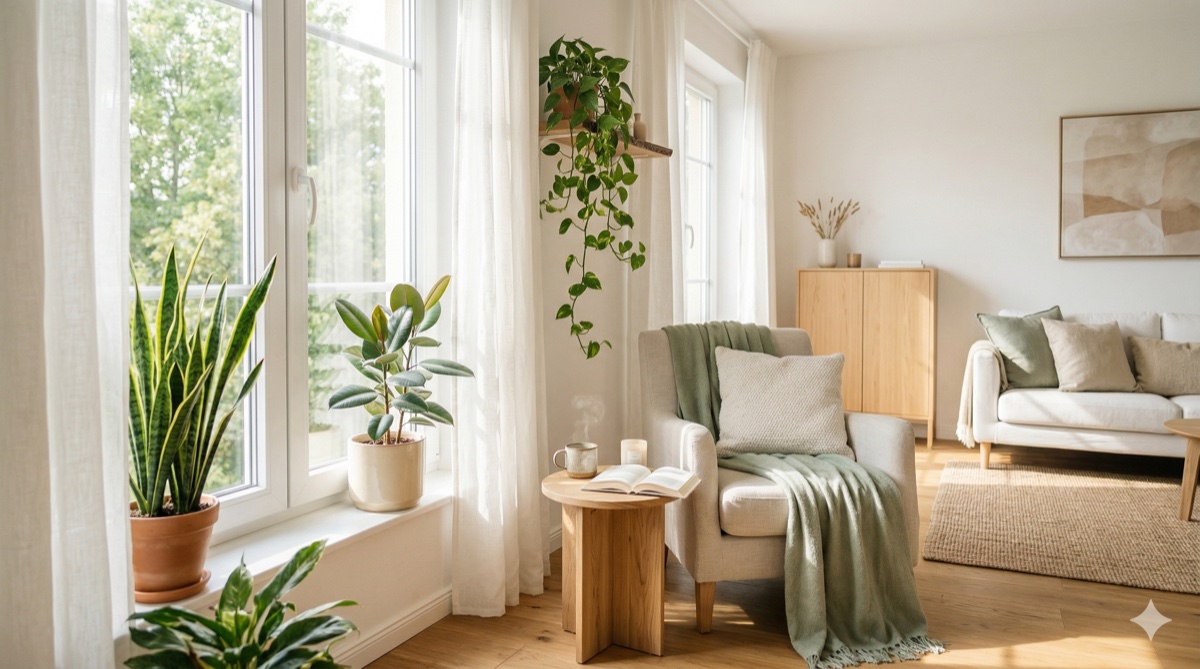
Have you ever noticed how a room flooded with natural light instantly feels more welcoming? The sunlight in your living space does more than brighten a room—it may influence your mood, energy, sleep quality, and overall sense of wellbeing. Understanding how daylight shapes your daily experience at home can help you make simple changes with meaningful benefits[1].
Why Natural Light Matters for Your Health
Your body has evolved to respond to sunlight in powerful ways. Natural light serves as the primary signal that synchronizes your internal clock—a system known as your circadian rhythm. When sunlight enters your eyes, specialized light-sensitive cells in your retina called intrinsically photosensitive retinal ganglion cells (ipRGCs) send signals directly to the suprachiasmatic nucleus in your brain. These cells, discovered by researchers at Brown University and published in Science in 2002, are distinct from the rods and cones used for vision—they exist specifically to help regulate hormones, body temperature, and sleep-wake cycles throughout the day.
Research suggests that people who receive more natural light exposure during the day tend to report better sleep quality, improved mood, and higher energy levels compared to those who spend most of their time in artificially lit environments. A well-known study published in The Lancet by Lambert et al. (2002) found that the brain's production of serotonin—a neurotransmitter associated with mood regulation—was directly correlated with available daylight, with levels lowest during winter months. Separate research by Viola et al. (2008), published in Neuroendocrinology Letters, demonstrated that workers exposed to higher levels of natural daylight during work hours showed significantly better sleep quality and reduced sleep latency compared to those working in artificial lighting.
How Sunlight in Your Living Space Affects Mood
The connection between natural light and emotional wellbeing is well-documented. Seasonal Affective Disorder (SAD), a form of depression first formally described by Rosenthal et al. (1984) at the National Institute of Mental Health, highlights how powerfully light can influence mood. Research published in the Journal of Affective Disorders has shown that bright light exposure is one of the most effective non-pharmacological approaches for managing SAD symptoms. But even outside seasonal patterns, the quality of light in your daily environment may play a role in how you feel.
Serotonin and Happiness
Exposure to natural light may help stimulate serotonin production in the brain. This neurotransmitter contributes to feelings of happiness, calm, and focus. When your living space receives ample daylight, you may naturally benefit from this mood-enhancing effect throughout the day—without needing to step outside.
Reducing Stress at Home
Your home environment plays a significant role in how you manage stress. Spaces with abundant natural light tend to feel more open and less confining, which may contribute to lower stress levels. Understanding how your body responds to chronic stress can help you appreciate why creating a calming home environment matters for your long-term health.
Natural light exposure also helps regulate cortisol—your body's primary stress hormone. Research by Scheer et al. (2009), published in Psychoneuroendocrinology, demonstrated that dim light exposure in the morning disrupted the normal cortisol awakening response, while bright light helped maintain a healthy cortisol rhythm. Morning light exposure in particular helps establish a healthy cortisol rhythm: higher in the morning to promote alertness, and gradually declining toward evening to prepare your body for rest.
Sunlight, Sleep, and Your Daily Energy
One of the most significant ways sunlight in your living space supports your health is through its effect on sleep. Your circadian rhythm depends on consistent light cues to function properly, and the light you receive during the day directly influences how well you sleep at night.
The Daytime Light-Sleep Connection
Research indicates that people who receive more natural daylight during their waking hours tend to fall asleep faster and experience deeper, more restorative sleep at night. A study by Boubekri et al. (2014), published in the Journal of Clinical Sleep Medicine, found that workers in offices with windows received 173% more white light exposure during work hours and slept an average of 46 minutes longer per night compared to those in windowless offices. This happens because daylight exposure helps time the release of melatonin—your sleep hormone—so that it peaks at the right time in the evening.
If your living space is dim during the day, your body may not receive strong enough signals to establish a clear sleep-wake cycle. Combined with good sleep hygiene practices, optimizing natural light in your home can be a powerful yet overlooked strategy for better rest.
Melatonin and Evening Darkness
Equally important is the contrast between light and dark. When your living space receives bright natural light during the day, the transition to evening dimness becomes more pronounced. This contrast helps signal to your body that it is time to wind down, potentially improving your ability to fall asleep naturally.
Natural Light and Cognitive Performance
If you work or study from home, the amount of sunlight in your living space may directly affect your productivity and focus. A landmark study by the California Energy Commission found that workers in offices with ample daylight reported less fatigue, fewer headaches, and improved concentration compared to those working in spaces with limited natural light.
Additional research from Cornell University, led by Dr. Alan Hedge and published in the Journal of Environmental Psychology, demonstrated that workers in daylit offices experienced a 51% drop in the incidence of eyestrain, a 63% drop in the incidence of headaches, and a 56% reduction in drowsiness. While these studies focused on workplaces, the principles apply equally to home environments where you spend significant time reading, working, or engaging in focused activities.
Practical Ways to Maximize Sunlight in Your Living Space
You don't need to renovate your home to benefit from more natural light. Here are practical strategies to bring more daylight into your living space:
Optimize Your Window Treatments
Heavy curtains and dark blinds can block significant amounts of natural light. Consider switching to lighter, sheer curtains that provide privacy while allowing sunlight to filter through. If you need blackout curtains for sleep, tie them back during the day to maximize light exposure in your waking hours.
Use Mirrors Strategically
Placing mirrors opposite or adjacent to windows can effectively double the natural light in a room by reflecting daylight deeper into your space. Large mirrors or glass surfaces near windows are particularly effective for brightening darker corners of a room.
Choose Light-Reflecting Colors
Wall colors significantly influence how light moves through a space. Light, warm tones—such as soft whites, pale yellows, and light neutrals—reflect natural light more effectively than dark colors. Even your ceiling can contribute: painting it white can help bounce light downward into the room.
Rearrange Furniture Thoughtfully
Position your most-used furniture—such as your desk, reading chair, or dining table—near windows where natural light is strongest. Avoid placing tall furniture like bookshelves in front of windows, as this can block precious daylight from entering the room.
Keep Windows Clean
It may sound simple, but clean windows can make a surprising difference. Dust, water spots, and grime on window glass can reduce the amount of light entering your home—some building performance studies estimate light transmission losses of 15-20% on unwashed residential glass, and even more in urban environments with higher particulate pollution. Regular cleaning helps ensure maximum light transmission.
Indoor Plants and Natural Light: A Wellness Combination
Incorporating plants into your sunlit living space can amplify the wellness benefits of natural light. Indoor plants not only thrive in daylight—they may also improve air quality, reduce stress, and create a stronger connection to nature within your home.
Research on biophilic design—the practice of incorporating natural elements into built environments—supports this connection. A comprehensive 2019 review by Bringslimark et al., published in the Journal of Environmental Psychology, found that the presence of indoor plants was associated with reduced stress, lower levels of anxiety, and improved mood among building occupants. Separately, a study by Park and Mattson (2009) in the Journal of Therapeutic Horticulture reported that patients recovering from surgery who had plants in their rooms required less pain medication and had lower blood pressure readings compared to those without plants. Placing light-loving plants near windows creates a natural focal point that draws your attention to the light and greenery simultaneously.
- Snake plant (Sansevieria): Tolerates a range of light conditions and may help purify indoor air.
- Pothos (Epipremnum aureum): A low-maintenance trailing plant that thrives in indirect light.
- Rubber plant (Ficus elastica): A bold, leafy plant that enjoys bright, indirect sunlight.
- Aloe vera: A practical succulent that loves sunlight and requires minimal care.
Sunlight and Vitamin D: An Important Note
While sunlight in your living space offers many benefits, it's worth noting that most glass windows block the UVB rays necessary for vitamin D synthesis. This means that sitting in a sunlit room, while beneficial for mood and circadian rhythm, may not significantly contribute to your vitamin D levels.
To support adequate vitamin D production, consider spending time outdoors in direct sunlight when possible—even 10 to 15 minutes of sun exposure on exposed skin can be helpful, depending on your skin type, latitude, and time of year. If you have concerns about your vitamin D levels, consulting a healthcare professional is always recommended.
Creating a Light-Conscious Home Routine
Making the most of sunlight in your living space becomes most effective when it becomes part of your daily rhythm. Here are some simple habits to integrate into your routine:
- Morning light ritual: Open all curtains within the first 30 minutes of waking to signal to your body that the day has begun. This can help support a healthy cortisol awakening response.
- Daytime workspace: Position yourself near a window during work hours to maximize natural light exposure when you need focus and energy most.
- Afternoon transition: As the day progresses, notice how the changing light in your space creates natural transitions—this can support your work-life balance by providing environmental cues for when to shift between activities.
- Evening wind-down: Gradually dim your environment as bedtime approaches. Drawing curtains as the sun sets and switching to warm, low-intensity lighting can help prepare your body for rest.
Bringing More Light Into Your Life
The sunlight in your living space is one of the most accessible wellness tools available to you. Unlike supplements, equipment, or complex routines, natural light is free and already present—you may simply need to make small adjustments to receive more of its benefits.
Start with one change today. Open your curtains a little wider, move your favorite chair closer to a window, or place a mirror to catch the afternoon sun. These small shifts can help transform your living space into an environment that naturally supports your mental wellbeing, energy, and daily rhythm.
Your home has the potential to be more than just a shelter—it can be a space where light actively contributes to how you feel, think, and rest. Let the sunlight in, and notice the difference it makes.
References
- Veitch JA, Galasiu AD. "The physiological and psychological effects of windows, daylight, and view at home." Journal of Environmental Psychology, 2012. https://doi.org/10.1007/978-1-4614-3466-2_2.
- Ihrig A, Matusiak BC, Zirngibl R. "The impact of daylight design on office workers." Journal of the Illuminating Engineering Society, 2019. https://doi.org/10.1080/15502724.2019.1636945.
- Holick MF. "Vitamin D deficiency." New England Journal of Medicine, 2007. https://doi.org/10.1056/NEJMra070553.
- Farley K, Veitch J. "A model of interior lighting design as a tool for improving occupant satisfaction." Lighting Research & Technology, 2001. https://doi.org/10.1177/147715350103300401.
- Leproult R, Van Cauter E. "Effect of 1 week of sleep restriction on testosterone levels in young healthy men." JAMA, 2011. DOI.
- Cho Y, Ryu SH, Lee BR, et al. "Effects of artificial light at night on human health." Experimental Neurobiology, 2015. DOI.