We spend approximately one-third of our lives asleep, yet we rarely consider how the physical mechanics of lying down affect our most vital function: breathing. The position of your body during sleep isn't just about comfort; it directly influences airway patency, oxygen saturation, and the quality of your rest[1]. For many, switching to the best sleep position for breathing can be the difference between waking up refreshed or feeling chronically fatigued.
Gravity is the silent architect of our sleep quality. When we lie down, the soft tissues of the throat, the tongue, and the position of the jaw all shift. Understanding these mechanics is the first step toward optimizing your nighttime oxygen intake.
The Gravity Trap: Why Back Sleeping Often Fails
Sleeping on your back, known as the supine position, is frequently cited as the worst posture for breathing quality[2]. In this position, gravity pulls the base of the tongue and the soft palate toward the back of the throat. This narrowing of the airway increases resistance, leading to the vibration of tissues we recognize as snoring.
For individuals with obstructive sleep apnea (OSA), the supine position can cause the airway to collapse entirely, leading to frequent nighttime awakenings and dangerous drops in blood oxygen levels[3]. Research indicates that the cross-sectional area of the upper airway is significantly smaller when lying on the back compared to the side[2].
Side Sleeping: The Gold Standard for Airway Patency
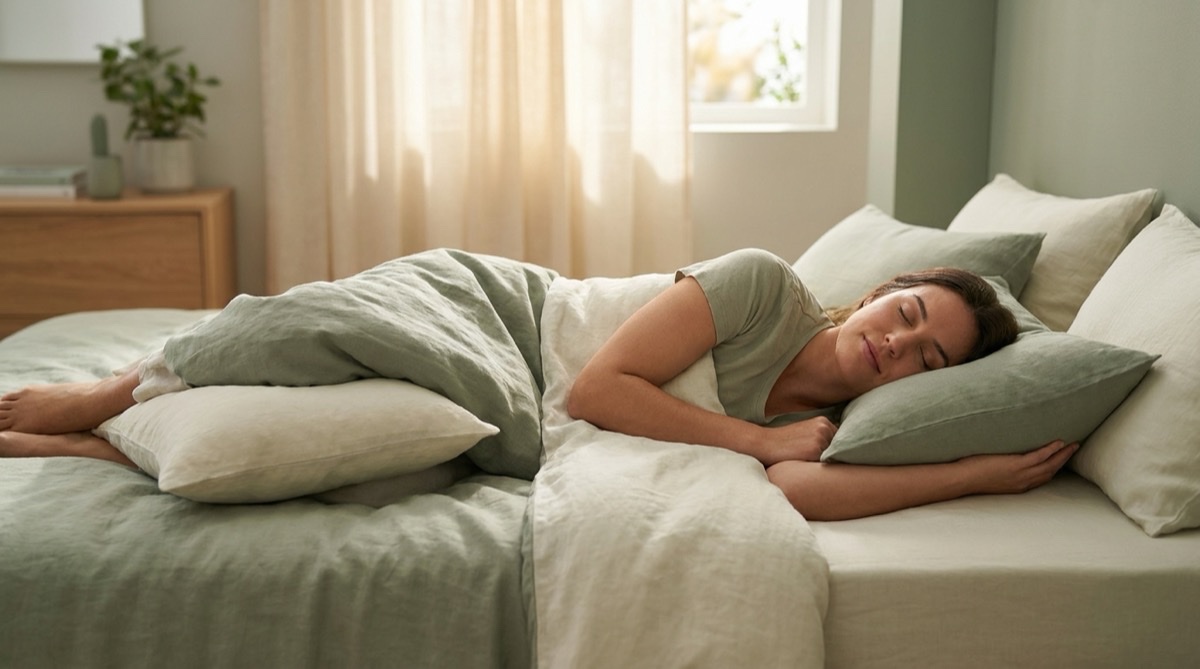
Lateral sleeping, or sleeping on your side, is widely considered the most beneficial position for maintaining an open airway. By lying on your side, you relieve the gravitational pressure on the tongue and soft tissues, allowing them to remain in a forward position[1].
- Left-Side Preference: Sleeping on your left side is particularly beneficial for those with acid reflux (GERD) or asthma. When you lie on the left, the stomach sits below the esophagus, preventing stomach acid from irritating the airways, which is a common trigger for nocturnal coughing[4].
- Internal Link: Pairing side sleeping with a consistent sleep hygiene routine can further enhance restorative rest.
The Elevated Approach: Support for Lungs and Sinuses
For individuals with chronic respiratory conditions like COPD or persistent sinus congestion, lying flat can be detrimental. Gravity causes mucus to pool in the lungs and sinuses, making breathing more laborious.
Elevating the head and upper body at an angle of 30 to 45 degrees—often achieved with a wedge pillow—is the "gold standard" for respiratory support[5]. This elevation allows the diaphragm to move more freely and prevents post-nasal drip from triggering nighttime wheezing.
Nasal vs. Mouth Breathing: The Quality Factor
The position of your body often dictates whether you breathe through your nose or mouth. Mouth breathing during sleep is a primary risk factor for airway collapse and reduced oxygen efficiency[6]. The nose acts as a sophisticated air-conditioning unit, filtering, warming, and humidifying the air before it reaches the lungs.
Furthermore, nasal breathing triggers the production of nitric oxide, a vasodilator that boosts lung oxygen exchange by approximately 18%[6]. If your sleep position causes your jaw to drop, you likely switch to mouth breathing, bypassing these critical benefits. Practicing calming breathing techniques before bed can help clear nasal passages and encourage a healthy nighttime rhythm.
Practical Tips for Better Nighttime Breathing
- Use a Wedge Pillow: If you struggle with congestion or snoring, a slight incline can significantly improve airway stability.
- Side-Sleeping Alignment: Use a pillow between your knees to keep your hips level and a pillow of appropriate height (approx. 5 cm) to keep your neck in a neutral position[1].
- Nasal Hygiene: Use a saline rinse or nasal strips if congestion forces you to breathe through your mouth.
- Evening Wind-down: Practices like Yoga Nidra can help transition the nervous system into a parasympathetic state, promoting deeper, more rhythmic breathing.
While adjusting your sleep position can provide significant relief, it is not a substitute for professional medical advice. If you experience severe snoring, gasping for air during sleep, or chronic daytime sleepiness, consult a healthcare provider or a sleep specialist to rule out underlying conditions.
References
- Marques, M., et al. "Effect of Sleeping Position on Upper Airway Patency in Obstructive Sleep Apnea Is Determined by the Pharyngeal Structure Causing Collapse." Sleep, 2017. https://doi.org/10.1093/sleep/zsx003.
- Kim, S. H., et al. "Effect of positional change on the upper airway space: a computed tomography study." Sleep and Breathing, 2019. https://doi.org/10.1007/s11325-018-1734-7.
- Cochrane Database of Systematic Reviews. "Positional therapy for obstructive sleep apnea." Cochrane.org, 2020. https://www.cochrane.org/CD010990/SLEEP_positional-therapy-obstructive-sleep-apnea.
- Mayo Clinic. "Sleep apnea — Symptoms and causes." MayoClinic.org, 2023. https://www.mayoclinic.org/diseases-conditions/sleep-apnea/symptoms-causes/syc-20377631.
- Harvard Health Publishing. "The best sleep positions for your health." Health.harvard.edu, 2024. https://www.health.harvard.edu/staying-healthy/the-best-sleep-positions-for-your-health.
- Oxygen Advantage. "Nasal vs Mouth Breathing: Why it Matters for Sleep." OxygenAdvantage.com, 2024. https://oxygenadvantage.com/science/nasal-vs-mouth-breathing/.